My Marine Corps journey began as many others have. I was looking for a way out of my old life. I was looking to grab that first rung to the ladder of a new life.
My senior year of high school, a friend told me about ROTC (Reserve Officer Training Corps) scholarships. He told me that the Navy would pay my way to the private college I wanted, and all I had to do was give the Navy four years. I was highly motivated. My parents could not actually afford college, but made just enough to ensure I received no financial aid.
So I applied. The Navy did not accept me initially. Only after other candidates (presumably) turned down the scholarship did they come back to me. Side note – I would later learn that I was part of the Marine Corps’ push to bring more women into the force. It was the mid-1990s, and all the services were being pressured to increase their percentage of women. I was just one more woman to add to the roster.
The summer after high school was busy and stressful. The Navy helped me regain my admittance to Holy Cross (since I had turned them down due to my inability to pay), and ushered me through the medical screening process. By mid-August, everything was complete. I had just enough time to buy a plane ticket and arrive for orientation.
My freshman year was amazing and challenging, for many reasons. First of which – I was no athlete. I struggled mightily with the physical requirements of ROTC training. But I was loving my new life. I loved my school. I loved my new friends. I loved being on my own for the first time. I was still a Navy option – meaning I was slated to join the Navy at the end of college. That would soon change.
The summer after freshman year, the Navy sends all its ROTC students to something called “Core Training for Midshipmen” (CORTRAMID). Basically four weeks of partying, CORTRAMID also introduces ROTC midshipmen to all the major aspects of the U.S. Navy: surface ships, submarines, aviation and . . . the Marine Corps.
After spending a week with the Marines, I was hooked. I loved the camaraderie, the commitment to excellence, the discipline. Instead of just paying my way through college, I was now pursuing something important. In my heart of hearts, I also wanted to prove to myself that I could do it. This is something many of us share – we have something to prove, whether to ourselves or someone else, or both. We most of us have something to prove.
For me, it was both. I doubted myself. And – I wanted to be part of something bigger than myself. I wanted to be proud of myself. I wanted to challenge myself. I switched over to Marine Corps sophomore year.
I also had something to prove. Just before I went to Officer Candidate’s School (OCS), my dad told me he didn’t think I could make it. If you knew my dad, you wouldn’t be surprised. Just more motivation. There was no way I was coming home without graduating.
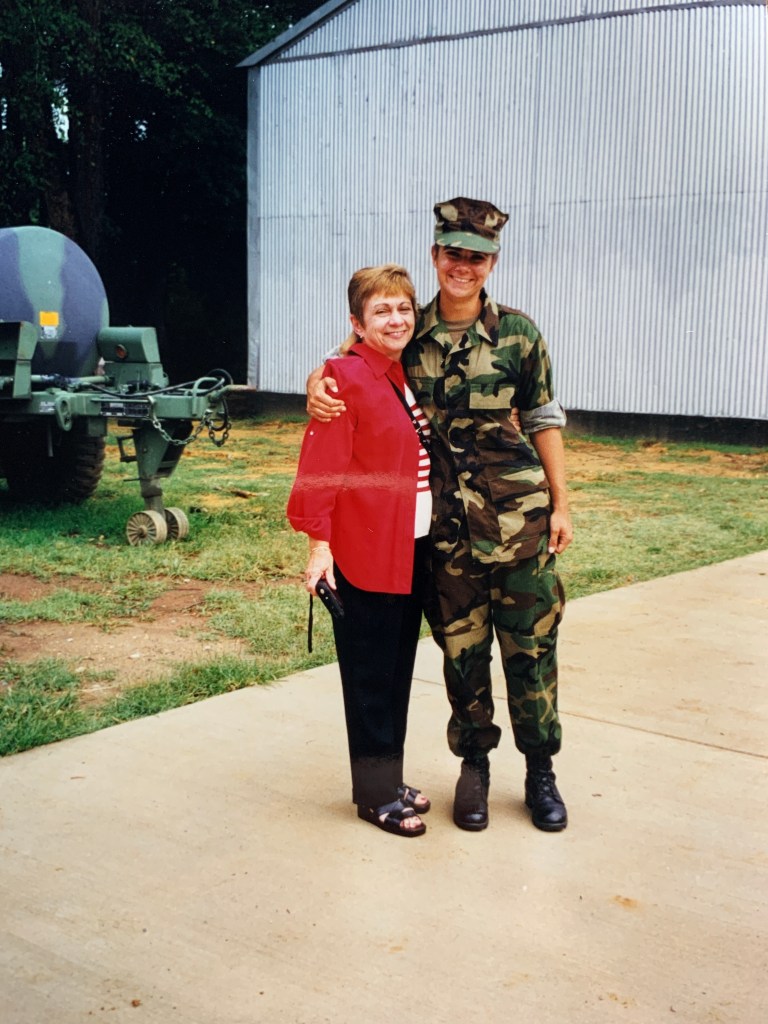
Mom and Me, Officer Candidates’ School Graduation, Quantico, Virginia, 1999 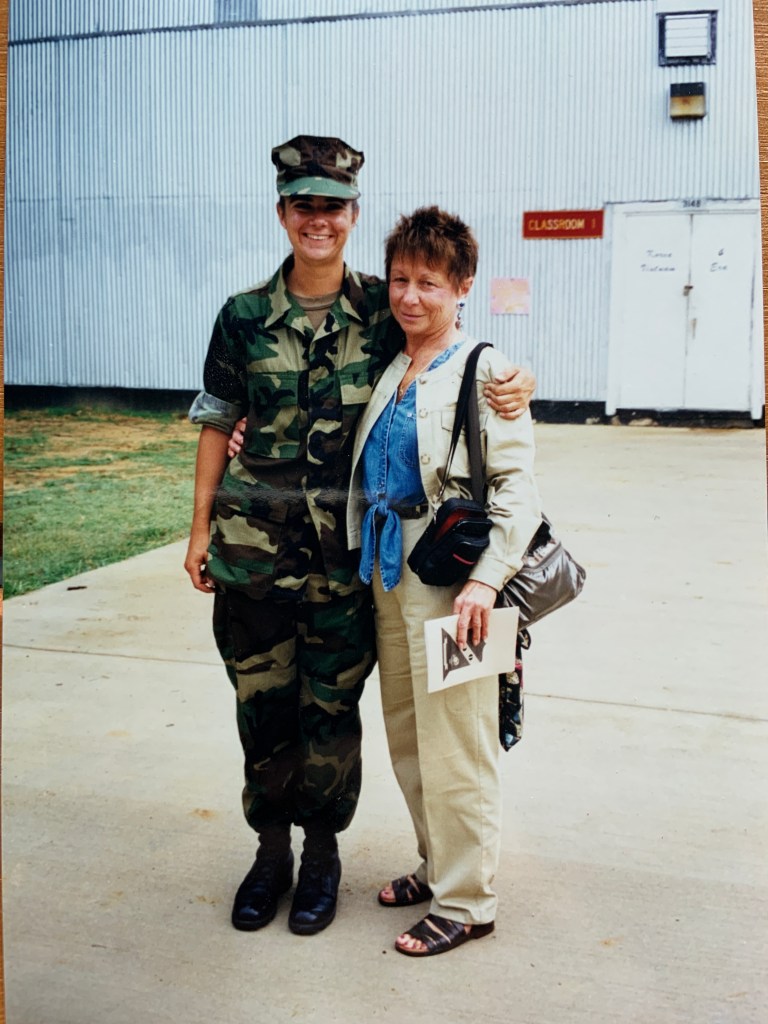
Aunt Thelma and Me, Officer Candidates’ School Graduation, Quantico, Virginia, 1999
ROTC students receive their commission (that is, enter the Marine Corps) at the time of college graduation. You must have a bachelor’s degree to become an officer, so the commissioning ceremony took place immediately after graduation. On May 26, 2000, my Marine Corps career officially began.
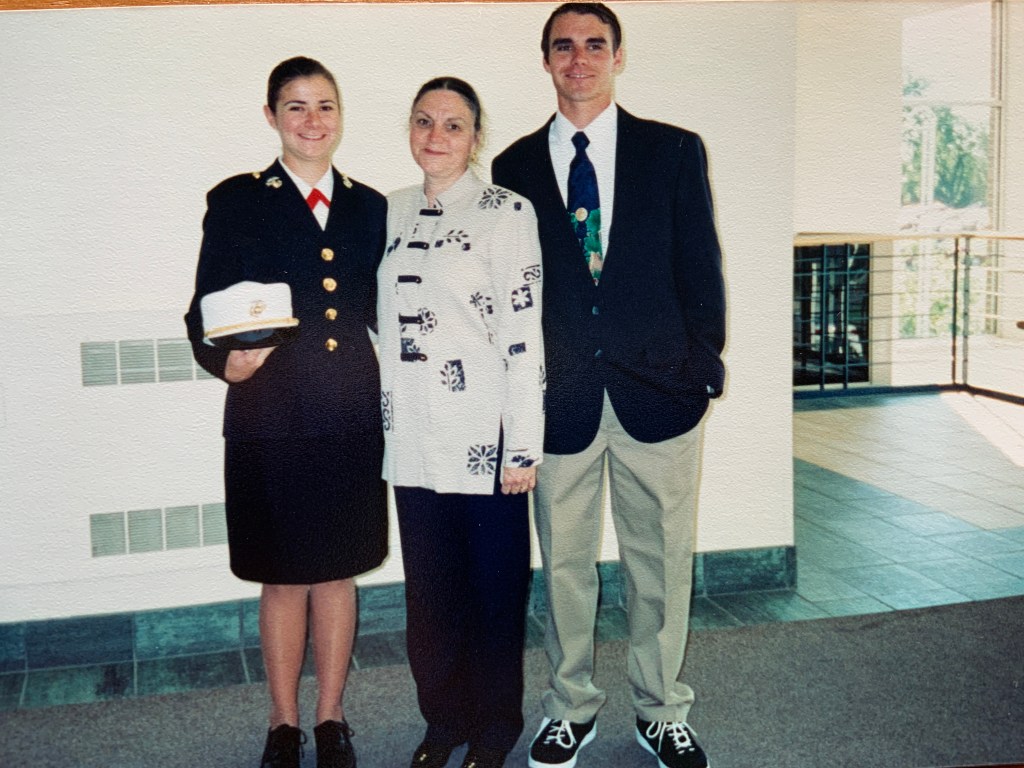
My Aunt Bette Lou and brother, Bruce at my Commissioning ceremony, Worcester, Massachusetts 2000
The Marine Corps made me a logistics officer, and sent me to Camp Pendleton, California. I arrived in “the fleet” April 2001, just in time to be on active duty for September 11, 2001. I remember hearing about the planes crash into the World Trade Center, and wondering what was next for us. I became part of a group that was supposed to go to Tajikistan to build an airfield in late 2001 (just long enough to ruin our holidays but not actually deploy). In early 2003, I deployed to Iraq as part of the initial combat operations. I was there for “the war”.
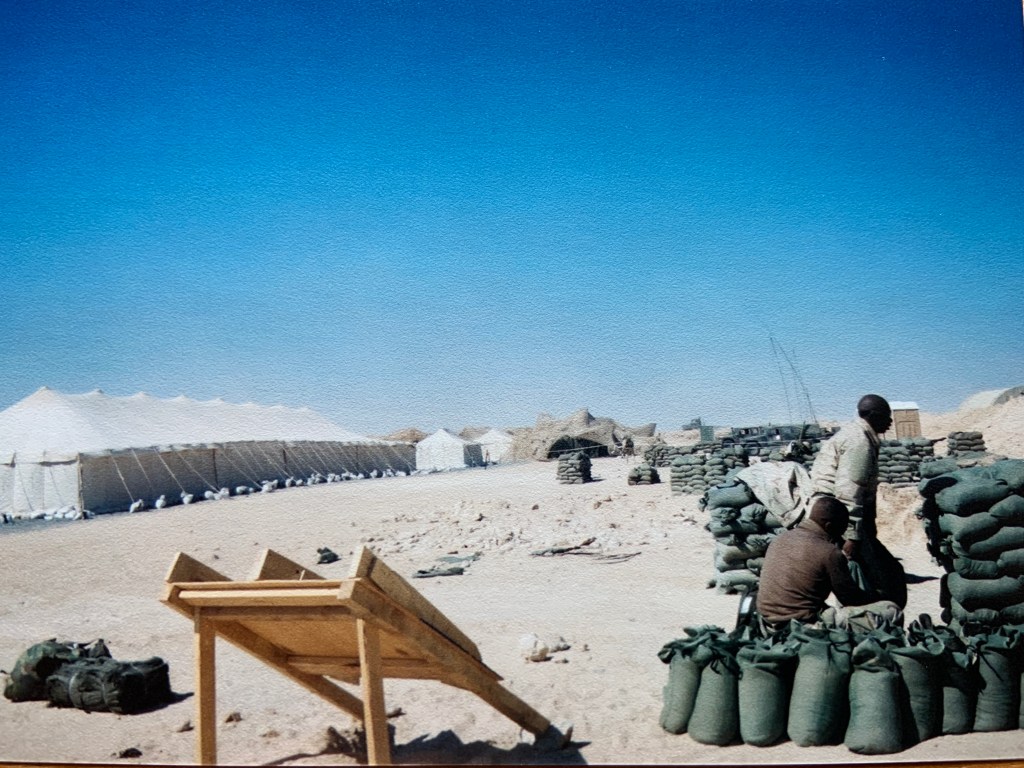
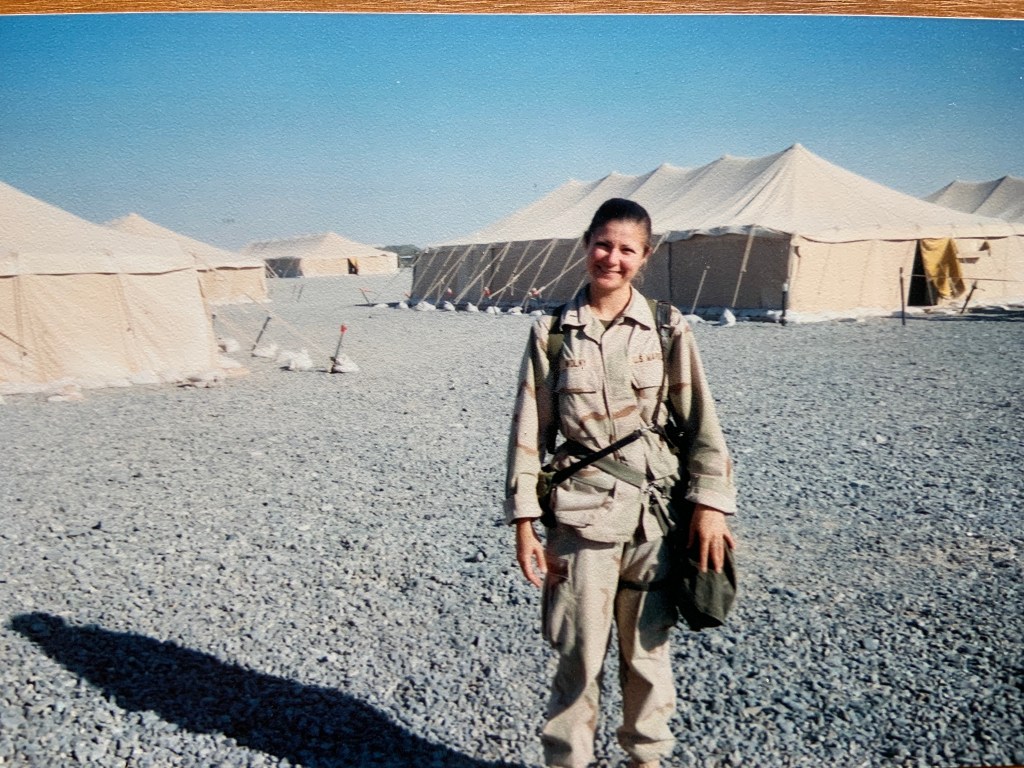
Then I left active duty. I loved being a Marine, but I didn’t want to be one forever (or so I thought). My mom had had heart surgery three days after I landed in Kuwait. She did not want me to be a Marine, nor to return to Iraq. I thought it unfair of me to remain on active duty.
So I joined the civilian world, where I went through what so many veterans go through. I missed my family. I missed waking up every day with a purpose. I missed feeling like I had something to be proud of simply because I was a Marine. The resources did not exist (or I failed to find them) to help me through this transition. Less than a year after I left active duty, I was back on orders.
For the next several years, I jumped around, on and off active duty. I spent five months in Miami and Antigua, supporting a military exercise with a variety of nations around the Caribbean. I spent a year in Stuttgart, Germany, supporting logistics operations in Ukraine, Morocco and Norway. I spent three years on active duty in Washington, D.C. at Headquarters Marine Corps. This proved to be my favorite and most formative billet. I learned how to think strategically, how to speak to and work with senior leaders. I learned how the military worked at an institutional level.
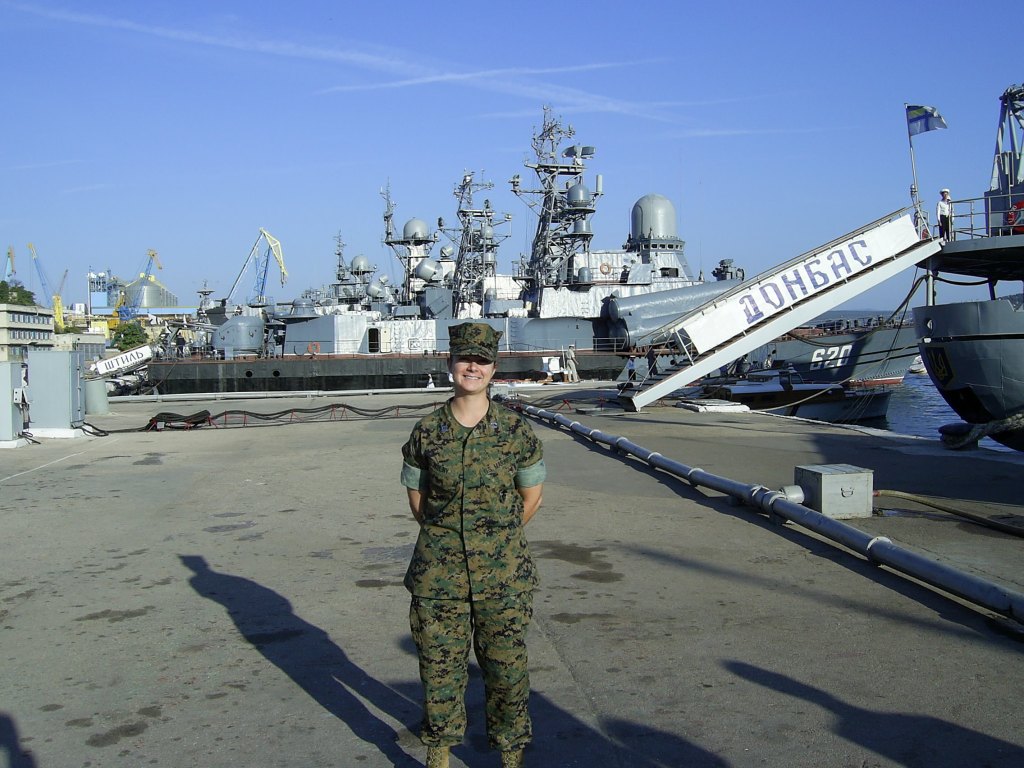
Sevastopol, Ukraine 2006 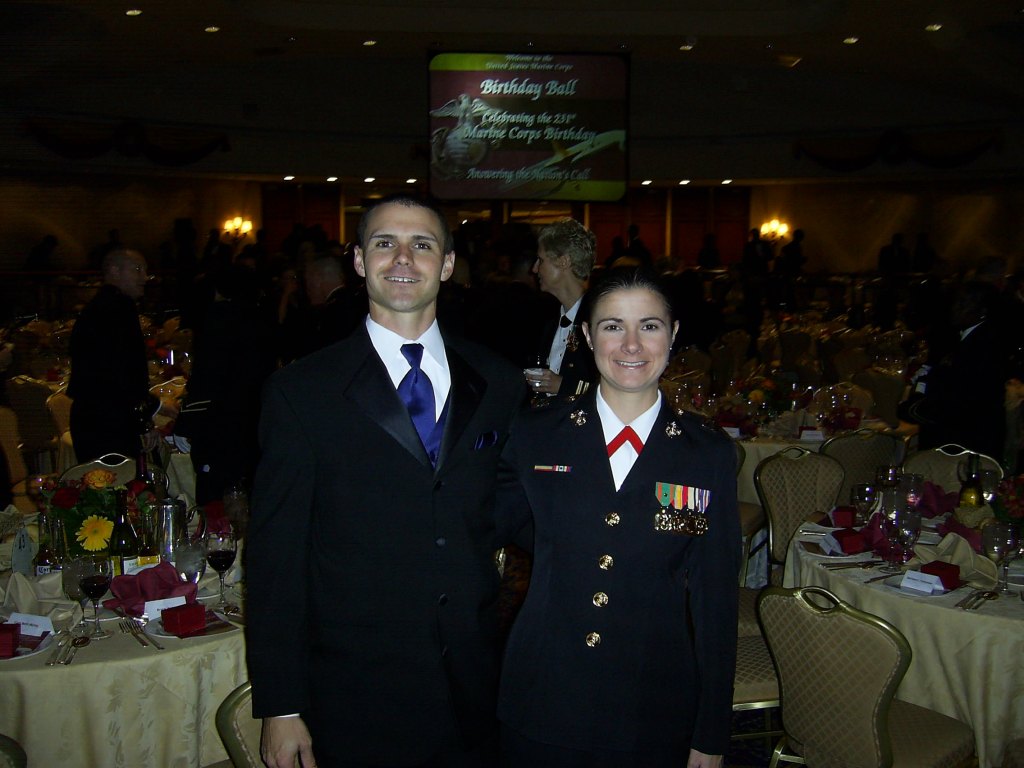
Commandant’s Birthday Ball 2006 (with my brother, Bruce)
Then I went to work for the Navy (as a civilian). I became a Presidential Management Fellow (a leadership development program in the federal government) and worked for the Navy for about three and a half years. I loved the experience. I got to work and travel extensively, and learned far more about the Navy than I ever could have otherwise.
In 2013, I went back on active duty and deployed to Afghanistan. I was the company commander for a unit that was collecting Marine Corps equipment to clean, repair and return it to the United States. It was a challenging assignment, for so many reasons. But nothing like my next assignment.

My Staff, Afghanistan 2013 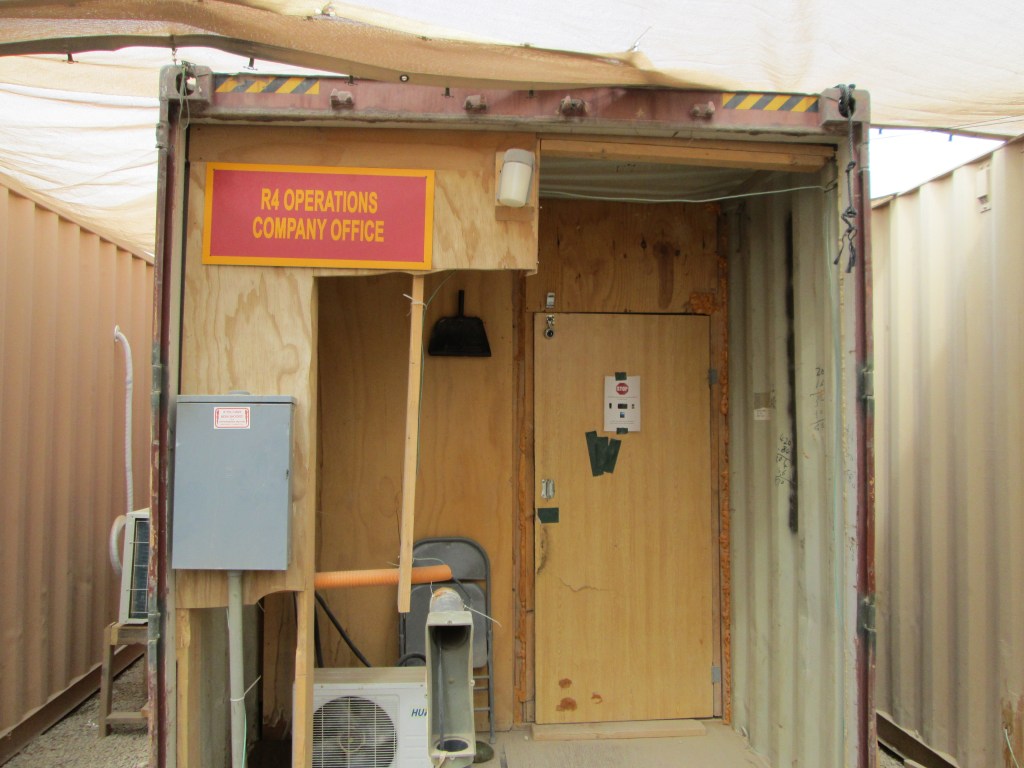
My Office “Building”, Afghanistan 2013
When I returned to the U.S., I went to graduate school full-time. I was working on my PhD in military history, specifically researching women in the Marine Corps. A former instructor of mine discovered what I was doing, and asked if I would join the Marine Corps in its gender research effort.
Of course I said, “Yes!”. I wanted to be part of history. This was the last line to cross, the last barrier to women’s full integration. I was studying this academically, but to be part of it as it was happening? To potentially shape the future of women in the Marine Corps? I had to do it.
The next eighteen months were the most challenging and disheartening of my professional life. I gave it everything I had, and did accomplish a few small things. We completed a Smart Adaptations Study (Parts 1 & 2) and researched women’s Combat Action Ribbons. But my most important accomplishment may seem trivial to some. I took everything to the Marine Corps Archives when we were done. I received permission to do so. I gathered every document I could, with some help from others in the office. We have a full record of this period in Marine Corps history. I am proud of that.
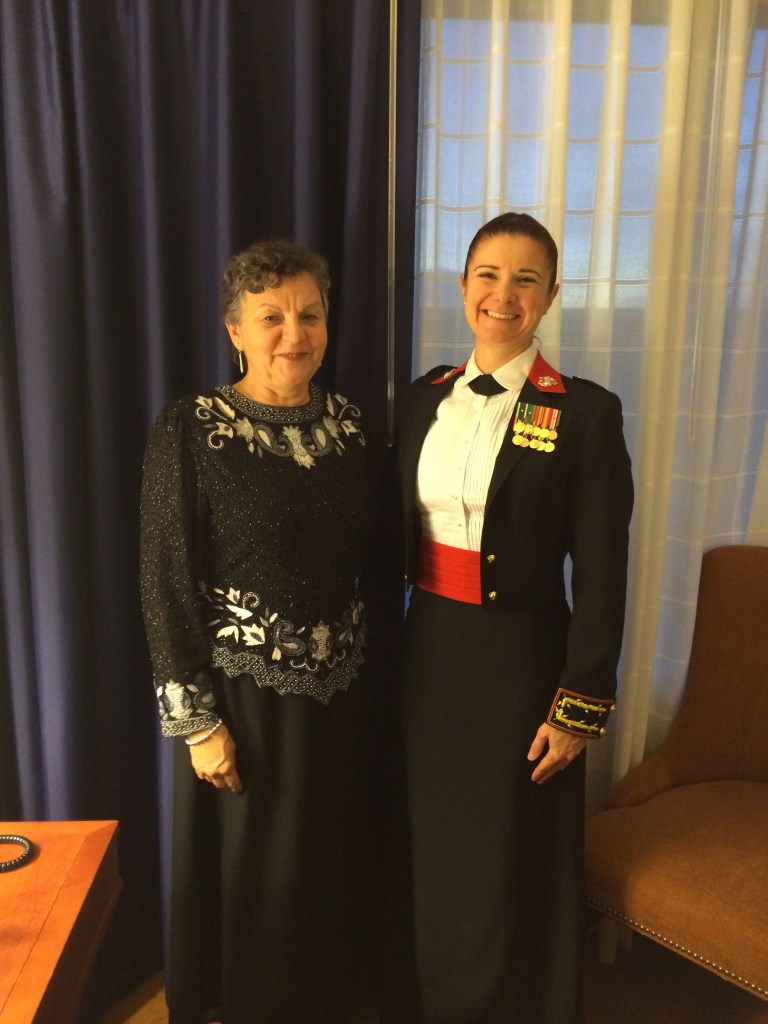
Commandant’s Birthday Ball 2014 (with my Aunt Bette Lou) 
“The Knifehand”, 29 Palms, California 2015
After that, I needed some time off. I traveled to Chile in 2017 to learn Spanish and relax. I loved it so much that I decided to stay. Over the next eighteen months, I traveled back and forth between the U.S. and Chile, alternately doing my reserve time and building a life in South America.
My final active duty billet was in Norfolk, Virginia. I received orders to teach at the Joint Forces Staff College. I spent fifteen months teaching operational level planning to majors and lieutenant colonels. I retired officially from the Marine Corps on June 1, 2020.
The Marine Corps had its ups and downs. There were moments that I was not sure how I would get from one day to the next. It is still the best decision I have ever made.
In the Marine Corps, who I was was not only accepted, it was expected. I fit in the Marine Corps in a way that I have rarely fit anywhere else in my life. I loved the friends I made, the experiences and the adventures. This book is my gift to the Marine Corps, for everything it gave me.
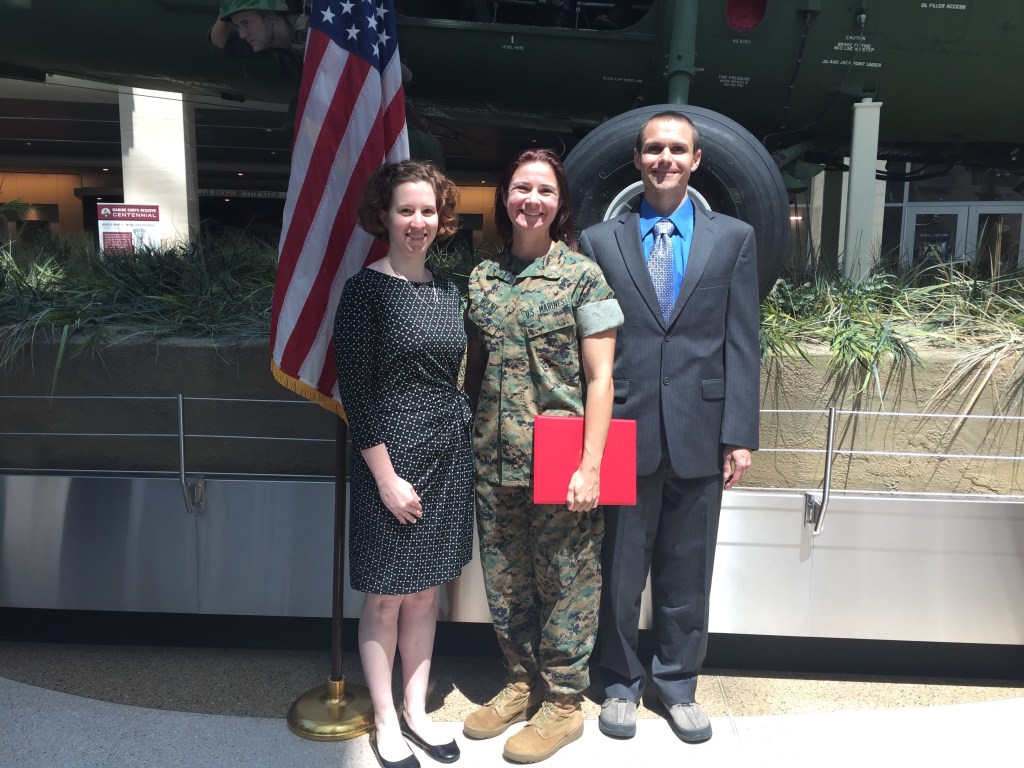
My brother Bruce and his wife Jenny 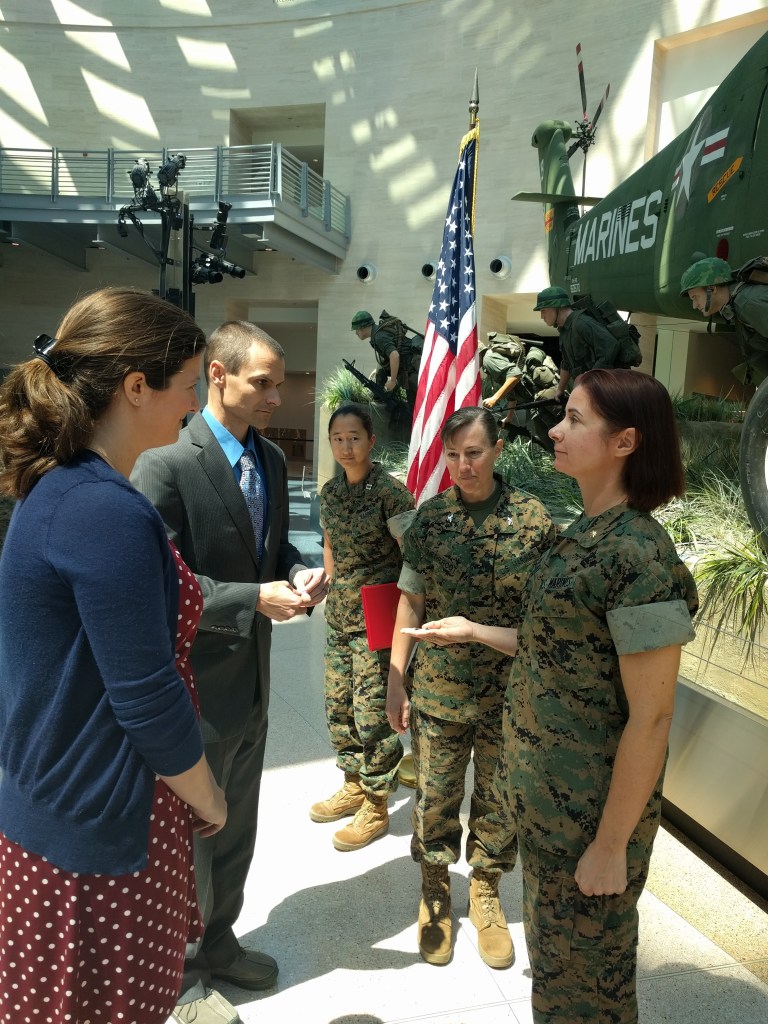
My brother Bruce and best friend Lucy pinned my new rank
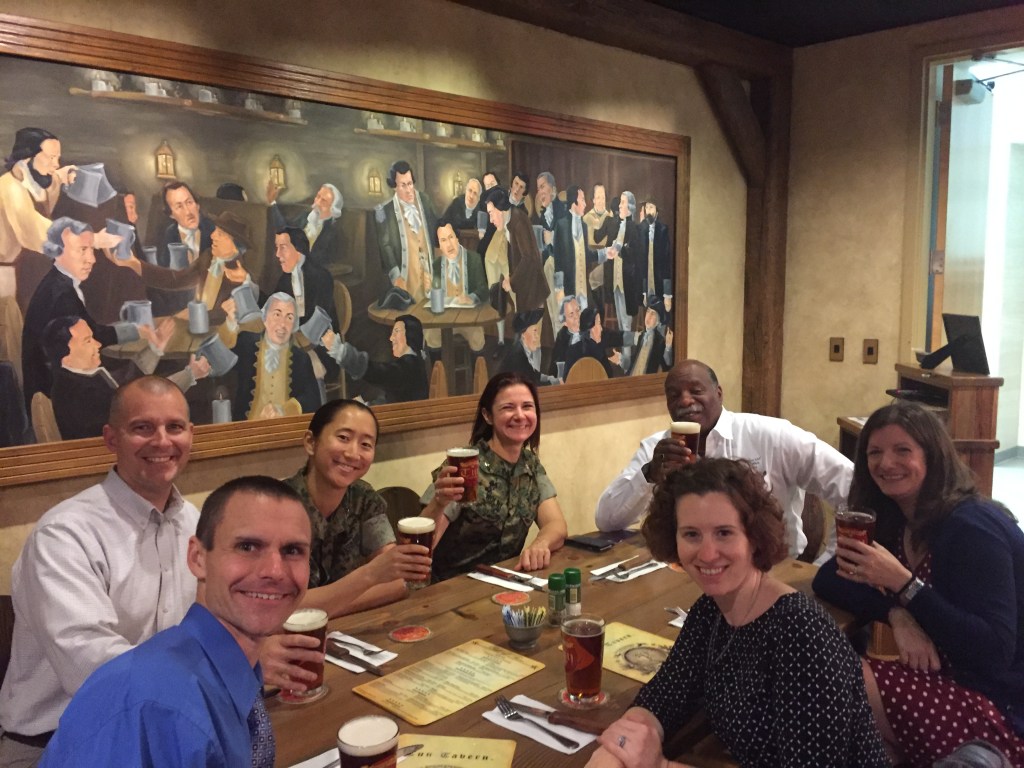
Tun Tavern, historic birthplace of the Marine Corps, recreated in the National Museum of the Marine Corps
 Breaking Into the Brotherhood