Gender integration has nothing to do with the women and everything to do with the men.
Senior Marine Leader, 2014
It took me a long time (and a deep dive in grad school) to understand this statement. All the research, all the senior leader questions and general apprehensions surrounding gender integration revolved around the women. We never talked about the men.
Much later, I began to understand. Even now, I’m still untangling that statement. At ITB, they seemed to understand implicitly that the men were at least as important as the women.
Leaders at the School of Infantry (SOI), Marine Combat Training (MCT) and Infantry Training Battalion (ITB) collaborated to bring three female Combat Instructors to ITB several months prior to the first female students arriving. Three may sound like a small number, especially considering that an average ITB company consisted of 18-24 instructors.
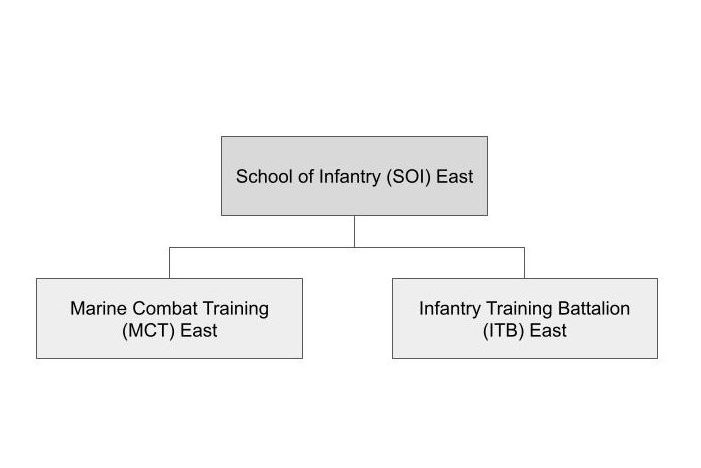
At the time, the Marine Corps only had female Combat Instructors at MCT. While Combat Instructors existed at both MCT and ITB, the only female instructors existed at MCT. Up to the point, women had only gone through MCT. If you remember from a previous post, all non-infantry Marines went to MCT following boot camp. The intent: “to transition from entry-level Marine to combat-ready Marine. At SOI, recently graduated enlisted Marines continue their education and training to become more proficient in the fundamentals of being a rifleman.”
Bringing any female Combat Instructors to ITB would add strain to MCT. The Marine Corps does not usually annotate a billet as either “male” or “female”. Only at a few specific places, such as boot camp or MCT, does the Marine Corps designate a billet as “female”. Because the Marine Corps did not direct that female Combat Instructors go to ITB, any female Combat Instructors leaving MCT would create a deficit.
Leadership at SOI, MCT and ITB were committed to this effort. They believed strongly that female instructor leadership was prove critical to successful integration, and they were all willing to accept the deficit at MCT to support success at ITB.
Three reasons existed for bringing in female Combat Instructors. The first seemed self-evident, but still required foresight and thought on the part of leadership. They needed “examples . . . positive examples” of women who had succeeded. They knew they needed female Combat Instructors (sergeant and staff sergeants) who could keep up on the hikes, move confidently through the obstacle course and demonstrate proficiency on the various weapons systems. No women had ever graduated from ITB. For the privates and privates first class coming from boot camp for the first time, they needed to see that women before them had succeeded.
One young (female) instructor demonstrated this with her competency on the Obstacle Course (O Course). Though the O Course was not a graduation requirement, it was something that all students needed to attempt. There is also a certain something about the O Course. It’s expected that a Marine completes it. The rope climb at the end intimidated more than the bars and the logs we had to overcome earlier in the course. It takes just a few minutes to complete, but it’s an intense few minutes.
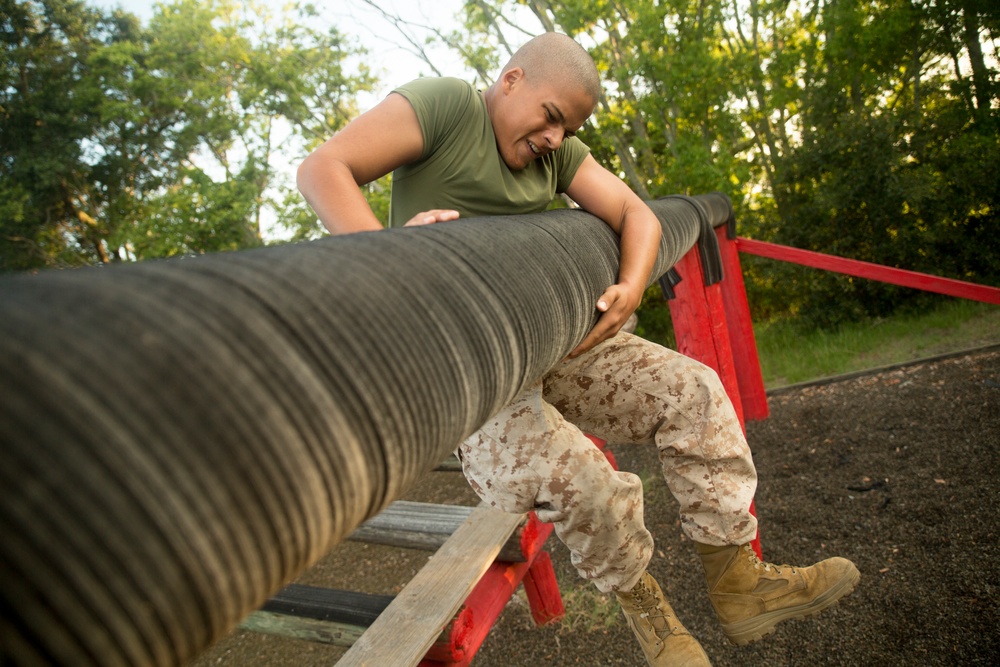
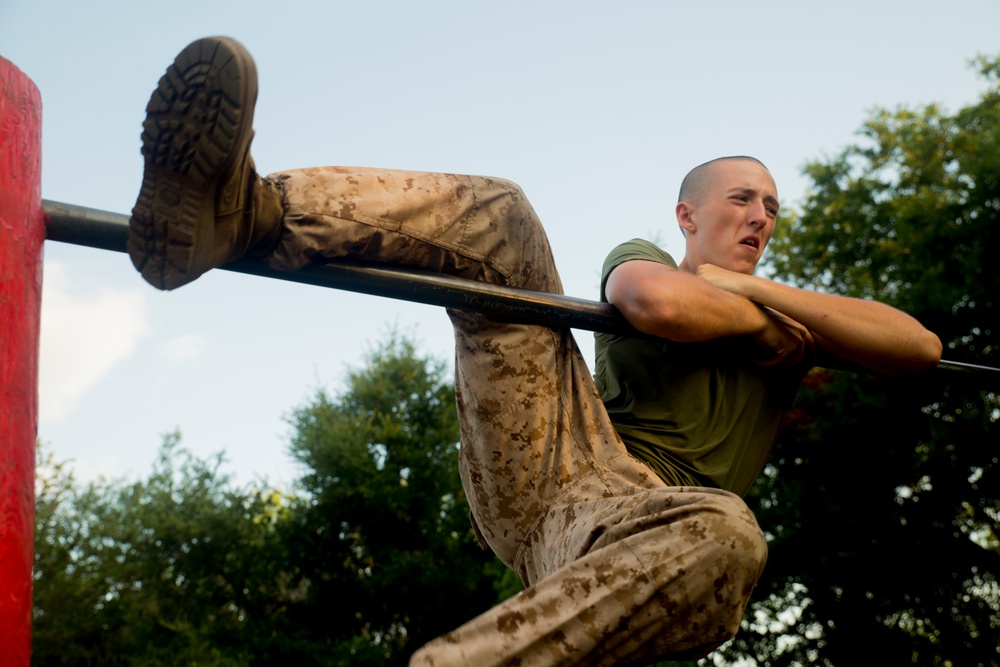
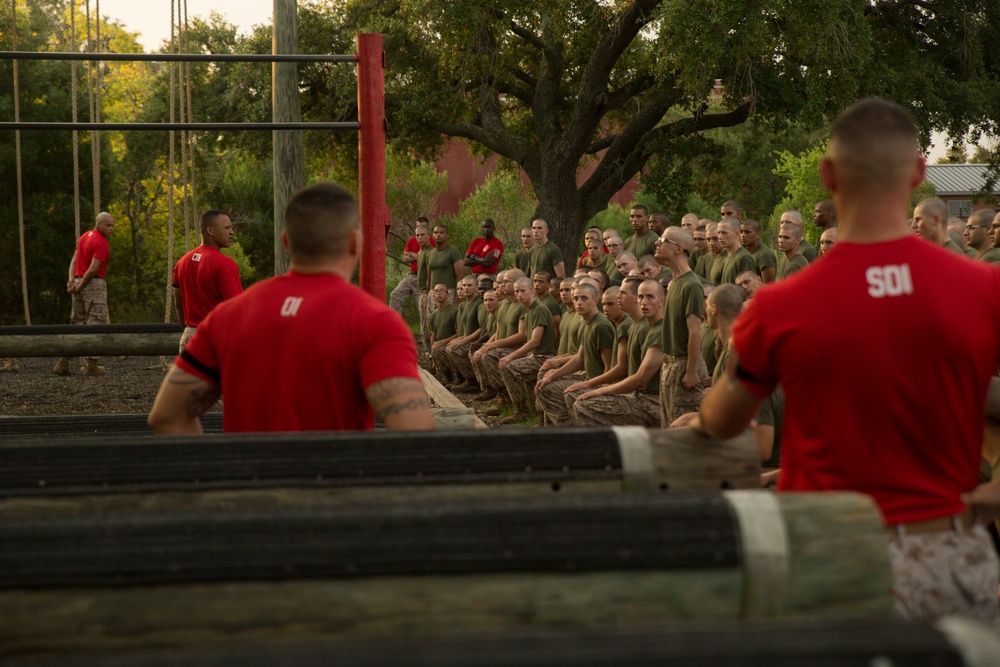
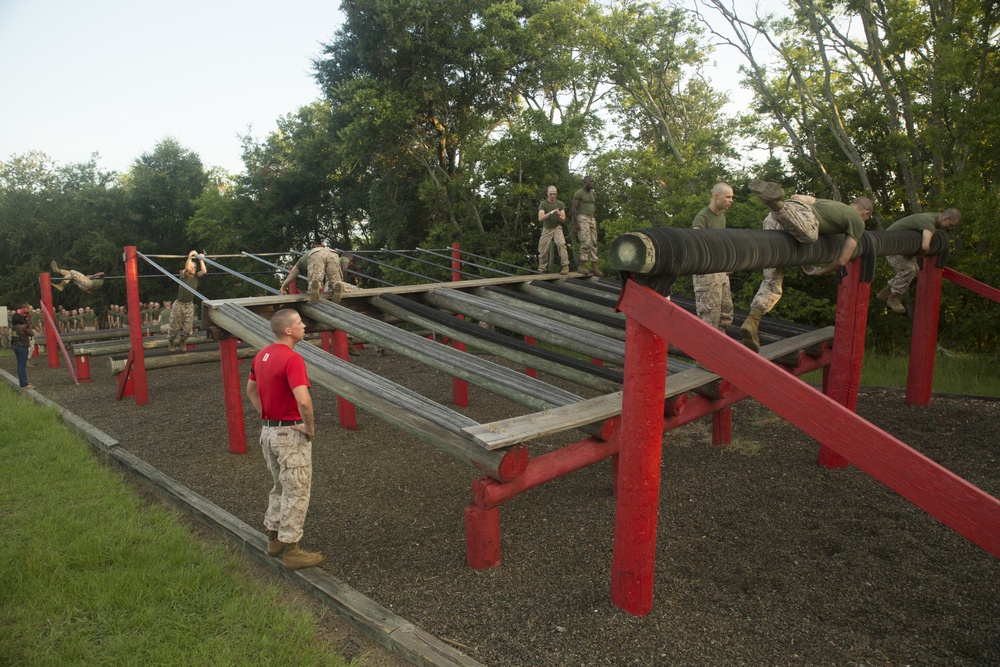
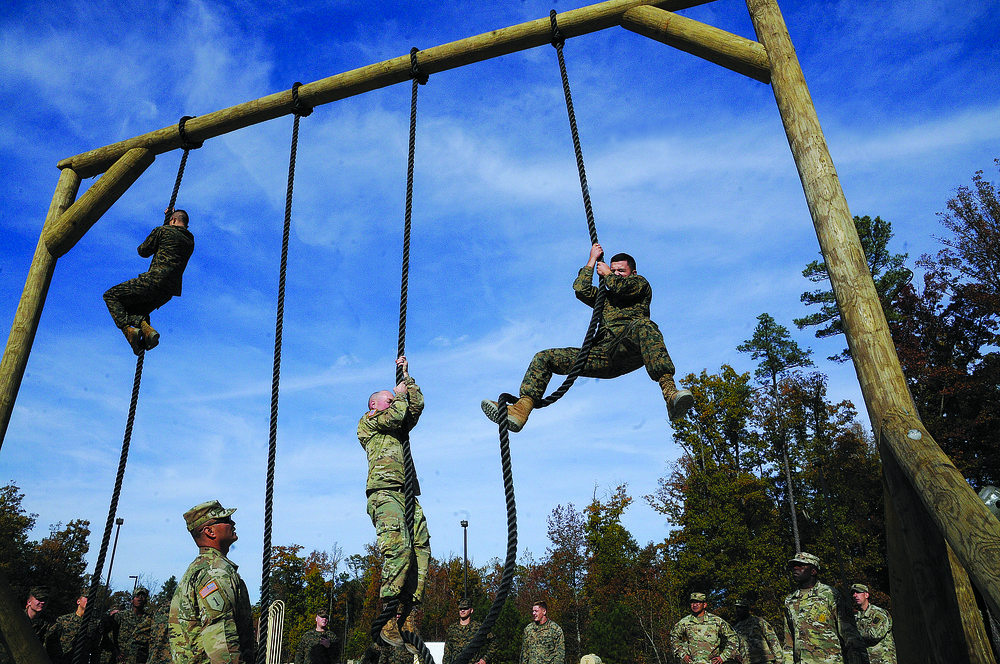
This young woman, a Combat Instructor from MCT, was only four foot three inches or four foot four inches tall. Yet she clamored up the log like it was nothing. She had to use different methods to get up to the eight foot log, for obvious reasons. Most male Marines “brute force” their way through the O Course. They can. Those vertically challenged Marines must devise alternate methods. The ITB staff and (male) Combat Instructors “watched that female scamper through that course like it was nothing.” Her male counterparts commented further, “she can do pull-ups, fifteen of them, no problem. She can climb over these obstacles”.
The (male) instructors clearly respected that she had the capability. Any female Marines (and even the shorter males) who were having issues with this kind of obstacle, were like, ‘Wow – this is a disadvantage to me . . . this is easy for her.’ Seeing a young sergeant who had no problems and looked at the obstacle and didn’t say, ‘it’s unfair and I’m not going to’ . . . but instead looked for different ways to overcome the obstacle . . . created a different atmosphere for the young leaders and students.
Additionally, leaders at SOI, MCT and ITB felt there was “value in having an outlet to have a (female) sergeant to go to talk to.” Some male instructors said, “we’re the instructors, all problems should come to us”. Others said, “I don’t want to say anything that may come off rough”. It was the first time most of the male Combat Instructors interacted with female Marines. Having been in the infantry from their first entry into the Marine Corps, some had literally never seen a female Marine.
The female students came directly from boot camp, where all of their instructors, leadership and fellow recruits had been female. They wondered, “how do I approach the male instructor with some of my concerns?” Female Combat Instructors, who had been in the Marine Corps several years, who understood male Marines and the particulars of being a woman in the Marine Corps, could serve as an intermediary. It was valuable to have female Combat Instructors while both male instructors and female students became accustomed to each other.
Lastly, leaders at SOI, MCT and ITB knew they “needed the (male) instructors to be able to accept them (female instructors) . . . to bring them into their cadre”.
The male Combat Instructors had, on average, two to three combat deployments under their belts. They arrived at ITB,
with a multitude of injuries – gunshot wounds, street fighting in Fallujah, thrown out of HMWWV’s due to IED’s. Every single one of them had lost a friend somewhere . . . PTSD (post-traumatic stress disorder) and TBI (traumatic brain injury) were being recognized and understood, but it was a rampant thing with the Combat Instructors . . the way they were holding it together was the units that they returned to . . . were their family.
Marine Leader, ITB
It was incredibly important that these women become part of the unit family. “It doesn’t matter what you look like physiologically under your set of cammies . . . it’s about what you do for the Marine Corps and as a team and as a family member.”
How to do that, when these women had not deployed as infantry Marines, nor trained as infantry Marines?
. . . a lot of times it’s the refusal to allow the Marine to the left and right of you to be exposed, to be in danger, to be left (behind). So you’re finding common cause in the brothers and soon to be sisters next to you . . . we want to leverage that ability to create a family that is then going to minimize ostracization and discrimination.
One of the first words people usually think of when they think of the Marine Corps is “intense”. There are many reasons for this, one of these being our dedication to physical fitness. If the women could not have been in Iraq or Afghanistan with their fellow male Combat Instructors, they could demonstrate their dedication and commitment to being Marines through high levels of physical fitness. This is a place (absent or prior to combat) where a Marine can push oneself past their self-perceived limits, where they can give their all, and where they can prove that they can be relied upon.
The leaders at SOI, MCT and ITB worked closely together to screen some of the “top tier performers” at MCT. These female Combat Instructors were incredibly fit, resilient, strong leaders already. Then, ITB sent these women through some of the ITB curriculum.
They sent the women through partly because they needed to know the curriculum before teaching to students (female or male). They also sent the women through with the male instructors. When the women passed, it meant for the male instructors that, “I know you weren’t with me in Iraq . . . but you were there when we went through PECLs (performance evaluation checklists). In some cases, you’re better than me (say in 9mm or M4). We’re running through the machine gun drill and it was flawless.”
One leader stated, “That built the confidence and cemented the teams, which made it easy as we moved forward to integration with the actual students”.
One of the male Combat Instructors commented on a female Combat Instructor, “we can’t stop her from working. Her work ethic, her drive, and the Marines love it.” She’d immediately fallen in with them. She’d immediately become part of the team. He said, “It’s like a sister-brother relationship.”
That was the point all along.
 Breaking Into the Brotherhood