Every country the team visited in 2014 had a different perspective and experience of integrating women into the infantry. When we visited Canada in October that year, we found that women had been serving in the infantry for nearly 25 years. Whereas Israel conscripted women primarily out of military necessity, Canada permitted women in ground combat forces because of an equal rights movement decades old.
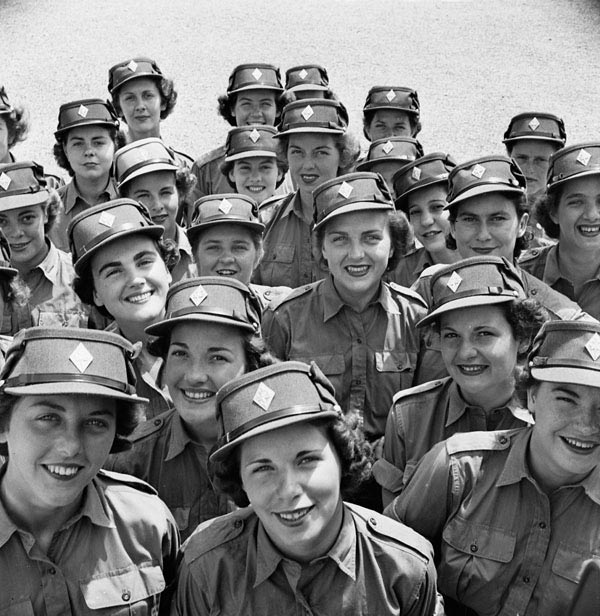
Canada began enlisting women in its Nurse Corps with the Northwest Rebellion (1885). In 1940, the Canadian government began women’s compulsory registration, simultaneously allowing women into other specialties beyond nursing. Some of the 33,000 women who served in WWII operated in anti-aircraft and artillery units, even finding themselves stationed in Italy and Northwestern Europe.
The government disbanded the women’s corps at the end of WWII, but North Atlantic Treaty (NATO) obligations and the Korean War enabled the women’s corps to return and to become permanent part of the Canadian Armed Forces. Through WWII and Korea, Canada remained closely aligned with its English-speaking allies’ (Australia, UK, US) policies on military women.
From 1967, Canada joined other nations as women’s rights movements gained traction across various aspects of society, to include the military. The 1967 Royal Commission on the Status of Women recommended significant changes: equal treatment of married persons and the removal of the immediate discharge for pregnant woman. In 1971, the Defense Ministry opened more jobs to women, except for combat (in air, on land and at sea). Additionally, the Canadian Forces Staff School, National Defense College and Non-commissioned Officers Training were fully integrated. Women could serve overseas and women could command men.
The Canadian Human Rights Act of 1978 extended equal protections regardless of sex, race, ethnicity, disability. The Act established the Canadian Human Rights Commission to investigate cases of discrimination and established the Canadian Human Rights Tribunal.
The Act forced the complete reassessment of military policy as it stipulated that there should be no discrimination against women, except under bona fide occupational requirement.
It took until 1980 for two of the three the military academies to open to women as “strong opposition had to be overcome”. Also in 1980, the Canadian Armed Forces (CAF) designed an experiment to “determine the impact of employing (gender) mixed groups in various environments”. The SWINTER (Servicewomen in Non-traditional Environments and Roles) trials continued through 1984. In the Air Force,
. . . women had performed their tasks well, had received no preferential treatment, and a majority of servicemen agreed that women should be fully employed . . . The commanding officers believed that this integration . . . did not compromise effectiveness because both men and women were held to the same high training standards.
The sea and ground trials experienced more difficulties, with complaints of “poor social integration” and women not physically able to complete required tasks. The trial report indicated, “that many of the problems could be traced to initial poor selection and training . . . and poor organizational or management preparation”. As the 1980s continued, some men “continued to view servicewomen as ‘women first, tradesperson second, and soldier never’”.
In 1987, a new set of trials commenced, called CREW (Combat-Related Employment of Women). The aim of the trials was not to “‘test women’ but ‘to evaluate the impact of mixed gender units on operational effectiveness’”. These trials ended inconclusively when the Canadian Human Rights Tribunal intervened by ruling that women should be fully integrated into all positions (except submarines – because of privacy issues).
Ground Combat
As a result, Canada integrated female soldiers into ground combat specialties (infantry, artillery, armor) by the early 1990s. Far ahead of its English-speaking allies, Canada dealt first with full gender integration. Australia, the UK and US would not integrate ground combat specialties for another 25 years.
Political, legal and social imperatives – rather than operational requirements – drove military policies and standards in the Canadian Armed Forces:
According to Canadian Forces policy, it is important that the Canadian Forces be integral to the society it serves, not isolated from it. Therefore the composition of the military should reflect the population it serves.
Active, dedicated leadership proved crucial to successful gender integration, as change was not easy. “The basic difference . . . is (between) a secular issue to do with equal opportunities . . . (and) an emotional issue linked to military traditions.”
Cultural change has been slow and challenges remain. In 2014, women constituted just 1.8% of infantry officers, with only .5% as enlisted infantry soldiers. Numbers were slightly higher in the armor (3.3% of officers) and artillery (6.7% officers, 4.9% enlisted).
Physical standards remains the metric for assessing whether someone was qualified to enter (and to remain in) ground combat specialties. The Canadian Armed Forces maintains minimum physical fitness levels common to the Army, Navy and Air Force. They equate to basic tasks that focus on humanitarian assistance missions. The Canadian Armed Forces primarily support humanitarian assistance missions both domestically and abroad.
During our visit, Canadian soldiers repeatedly pointed to low physical standards as a significant problem (for the infantry units). Most commanders and soldiers agreed that introducing occupation-specific; operationally-relevant ground combat specialties (i.e. infantry) standards would be helpful to both keep soldiers fit and to demonstrate that women (should they meet the standard) could operate alongside men. The Canadian Armed Forces has instituted specific training regimes for women to assist them in meeting the standards.
Results
Canadian leaders proudly informed the Marine Corps team that a combat engineer battalion had deployed to Afghanistan with a female commander, along with a female infantry company commander. Both led their units successfully and experienced no adverse effects due to their commanders’ gender. It is one thing to simply be in ground combat specialties. It is quite another to lead a mostly male unit, especially in a combat environment. The Canadian leadership was proud of these women.
The Canadian leaders also offered us the opportunity to speak with two focus groups. In these discussions, Canadian soldiers (male and female alike) emphasized that cultural change remains a work in progress.
While the majority of CAF officers and soldiers accept female soldiers as equals (many stated that they do not even think in terms of gender), several female service members stated that they still felt the need to re-prove themselves in each new unit. Further, several female soldiers believed that their male peers still viewed and judged them as females first. If a female succeeded, then that female was judged as equal. However, if a female proved not up to the task, the male soldiers judged her more harshly than an equivalent male not up to the task.
Finally, the women viewed gender-based accommodations (e.g. separate billeting, task-shifting, etc.) as unnecessary cultural vestiges that impaired operational effectiveness and limited successful integration. I remember the young enlisted women who spoke on this topic. They stated firmly and emphatically that they believed it ridiculous and irresponsible to separate women from their fellow soldiers simply because of gender. They said that they would “figure it out” when asked about privacy issues. It was their place to be with their fellow soldiers, regardless of gender. The male Marines with us looked surprised to hear this. My fellow female Marine and I simply sat and smiled, because we (of course) felt exactly the same way.
One offhand conversation we happened to have involved height and weight standards. My fellow female Marine officer and I were shocked to learn the Canadian Armed Forces had no height and weight standards. They were expected to be able to perform to the standard required, and expected to maintain their weight to enable them to do so.
This topic deserves its own (short) blog post, so I’ll stop there, and promise to write that post next.
The Canadian Armed Forces showed us what was possible, and how much work still needed to be done. They demonstrated that standards mattered the most, that the women entering these specialties demanded to be treated equally, and that they often joined for the same reasons as their male counterparts. These passionate young women sounded very much like female Marines. This surprised and impressed the male Marine leaders on our trip. My fellow female Marine officer and I were not at all surprised.
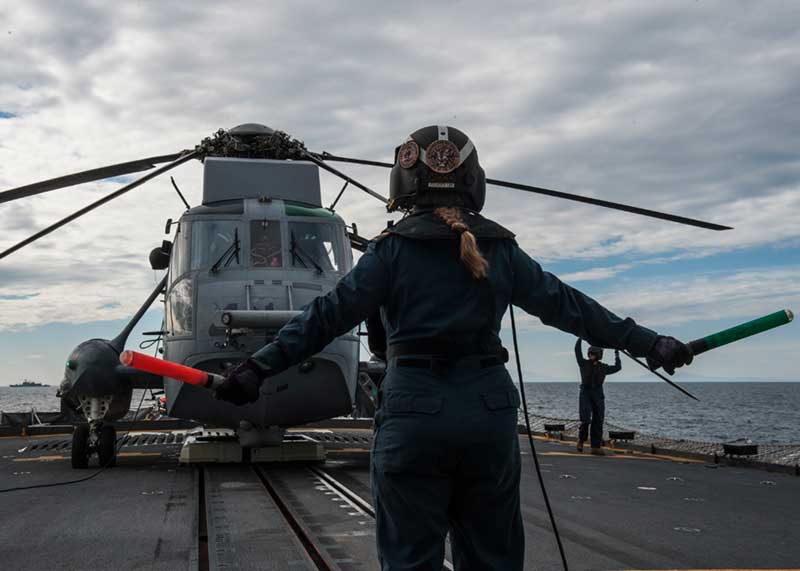

Courtesy of Canadian Armed Forces
 Breaking Into the Brotherhood