It’s the little things that trip us up. When Marines began arriving at the GCEITF, leadership faced a question. Where to house the women?
Marine Corps culture runs deep. Anyone who knows a Marine knows this. Things that are as natural to us as breathing, to outsiders, seem to be from another world. Things that contribute to building cohesive teams designed to perform in combat. Things that might get us into trouble from time to time. Most, the public admire and respect and seek to draw into their businesses and other organizations. Some, the public find strange or questionable, not able to understand because they weren’t one of us. We are an intense organization, and tend to attract intense individuals.
We take it all for granted. It’s how we grew up in the Marine Corps. Intense is normal. We accepted much of the culture because we not only volunteered, we actively sought entrance into this gun club. We all raised our right hands for the Marine Corps. Not the Army or the Navy or the Air Force. For the Marine Corps. After all, they didn’t promise a rose garden.

Civilians are often surprised when I tell them I was a Marine. They are more surprised when I tell them how much I loved it. They ask, “why did you join the Marine Corps?” Something so obvious to me seems unfathomable to them. Why would someone join the Marine Corps? More so, why would any woman join the Marine Corps? Isn’t the Marine Corps terribly masculine? What must it be like to be a woman amongst all those “rough men”?
What they, and some male Marines, don’t realize is that we (women) knew exactly what we were doing when we joined the Marine Corps. We saw all those things the public so admires but most people think they could never do. We wanted it. We wanted the challenge, physical and mental. We wanted the camaraderie. We wanted to play with cool toys. We wanted to walk with pride simply because we were Marines. We wanted into this gun club.
And any woman raising her hand to join the ground combat specialties knows what she’s signing up for. We accept as our entry fee things will not be easy or comfortable. We know life will be tough and that we will suffer. We want in for all the reasons men want in. In that respect, we are exactly the same. They didn’t promise us a rose garden either.

Integrity remains a foundational concept in Marine Corps culture. We strive for integrity as individuals (or we should). We strive for integrity as a unit. Doing things together (unit integrity) helps build the cohesion so necessary to successful, high-performing units. Therefore, maintaining unit integrity becomes paramount.
A unit works together, trains together, PTs (works out) together, often eats together, hangs out together and even gets in trouble together. They also live together.
Units are kind of like sports teams in the sense they all have an identity and a following. Teams are strong not because of one or two star players, but because everyone works together. Marines, once part of a unit, may identify with that unit for the rest of their lives, especially in the ground combat specialties.
What is a “unit”? A unit can be as small as a fire team (4 Marines) or may include several thousand. Smaller units form building blocks to make larger units. For example,
- 4 Marines make one fire team;
- 3 fire teams + squad leader makes one squad;
- 3 squads + platoon sergeant + platoon commander makes one platoon;
- 3 platoons + first sergeant + company commander makes one company;
- 3 companies + sergeant major + commanding officer = 1 battalion;
- 3 battalions + sergeant major + commanding officer = 1 regiment;
- 3 regiments + sergeant major + commanding general = 1 division.
Of course, there are exceptions and additions to this basic formula everywhere in the Marine Corps. Beginning with the basic building blocks makes unit integrity easier to understand.
The GCEITF was battalion-sized. Unlike a regular battalion, which might consist of just infantry or just tank or just artillery Marines, the GCEITF included Marines from a variety of ground combat specialties. Therefore, most Marines would understand it as a modified, ad hoc battalion landing team (BLT), a fully capable ground combat unit that usually came together to deploy overseas.
The GCEITF stood up in Camp Lejeune, North Carolina. It completed its “workup” (preparatory training) there. They lived in the barracks there.1
For the unfamiliar, “the barracks” are large housing buildings on base. They are less like apartments and more like college dorms. Except not nearly as fun. A lot more rules, a lot less freedom. Most junior Marines (privates, private first class, lance corporals) and some non-commissioned officers (NCOs – corporals and sergeants) live in the barracks. As Marines gain rank or get married, they are permitted to live off base.
Initially, the GCEITF’s commanding officer, Colonel Matt St. Clair, thought they might separate the women into a different barracks building, or at least keep them on a separate floor. For the same reasons a college dorms might have all male floors separate from all female floors, male military leaders sometimes assume they should separate the women from the men in their living spaces.
In deciding where to house the females, Colonel St. Clair looked to his female leadership. They protested vehemently at the notion of separating men from women. They were adamant about maintaining unit integrity.
There are at least two reasons to maintain unit integrity in the barracks. First, the men needed to see the women were doing the same things, living in the same (often lousy) buildings. Something happens when people live together and work together and play together. They get to know each other at a much deeper level, much faster, than would ever happen in otherwise normal circumstances. They don’t necessarily have to like each other, but they do have to learn how to get along and work together.
Because barracks are unit organized, they become an easy place to do a lot of things. Units form up for morning PT (workout) outside the barracks. Units “pass word” (pass information) at the barracks. Units might conduct promotion or award ceremonies at the barracks. Once a week, all around the Marine Corps, Marines clean the barracks. They clean individual rooms and common spaces for a barracks inspection the next day. This is just as much fun as it sounds. Separating the women might have created logistical challenges as well as disrupted unit integrity.
The second reason to maintain unit integrity in the barracks is the culture. For any one who has lived in a college dorm, you might guess a lot more happens in the barracks than simple quiet living. Any time of day or night, something is happening. Drinking, music, games, cards, and general horsing around – to put it mildly. And that’s in the general Marine Corps. “Division” Marines (those in ground combat specialties, especially the infantry) take partying and getting in trouble to another level. It’s a whole different ballgame when a Marine goes over to Division.
Many of the men wondered if the women would fit in, if they would get offended, if they would keep to themselves. Living together became the first indicator of how well the men and women would integrate. It became a place where male Marines began to see the female Marines wanted to be treated as Marines first and foremost. They weren’t looking to be treated like delicate flowers. That opened the door.
When we visited Canada in October 2014, we ran saw this as well. The four U.S. Marines (two men, two women) spoke with a panel of Canadian women, who were all serving in ground combat specialties. My female colleague and I just smiled as we watched the men’s jaws drop when the women talked about the possibility of being forced to live separately from their units. What was the point, they demanded. Why separate the women, put them on the other side of the base? What would the unit do if they were needed immediately? How much time would be wasted sending someone separately to go get the women? It was ridiculous, from their perspective. When the male Marines asked about privacy and hygiene, the women replied, Let us figure it out. We’ll figure it out. We need to be with our units.
Back at Camp Lejeune, the GCEITF traveled to Twentynine Palms, California to conduct The Experiment. There were no barracks at Twentynine Palms. The Marines lived aboard a place called Camp Wilson alternating every few days to live in two man tents at their respective ranges. They did this for the better part of two months.
Quonset huts are relics of World War II. They are long, arch-style structures. They consist of one large room. Marines in a Quonset hut live next to each other, usually on cots, with their personal items and military gear close at hand. It’s definitely close quarter living. There’s not a whole lot of room for privacy. Having established the habit of unit integrity in the barracks at Camp Lejeune, the GCEITF Marines maintained unit integrity at Camp Wilson. This surprised everyone back at Marine Corps Headquarters. Living in the barracks was one thing, but an open room?
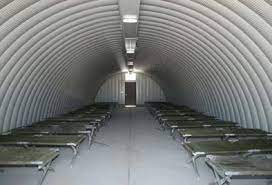
Privacy is not really a thing amongst male Marines. They walk around half naked or completely naked much of the time. In the Quonset huts, Marines might put up ponchos with 550 cord (really strong cord) to create some privacy between the men and women, but in such close quarters, privacy was not always possible. Some told me the men might shout a general heads up they were about to change, and anyone in the vicinity could look away, or not. Their choice.
The women rolled with it. Women usually changed in their sleeping bags. We learn this trick early in our careers, and become adept at changing in a wide variety of situations. Out at Twentynine Palms, if the women needed the guys to turn around for a second, they would ask them to do so. And the men would. What began with uncertainty and apprehension turned to respect and camaraderie.2
By maintaining unit integrity from the beginning, the GCEITF leadership established the foundation for everything else that would follow. Women wanted to be treated the same as the men. They demonstrated they could handle the training and suffering inherent in any infantry job. They showed they could roll with Division culture. That opened the door to inclusion, respect, camaraderie and unit cohesion – far more than many would have guessed possible.
FOOTNOTES
1A fire team might live in two rooms, next to each other. A squad might live in several rooms on the same “deck” (floor). A platoon might all live together on one deck. A company might live together in one building. A battalion might live together in a couple of buildings.
2Camaraderie, of course, varied amongst all the combat specialties in the GCEITF. In this instance, I am talking about the Weapons Company Marines, as I spoke with the most men and women from this part of the GCEITF.
 Breaking Into the Brotherhood