When I joined the Marine Corps Force Innovation Office (MCFIO) in June 2014, I had been a Marine for fourteen years. I loved the Marine Corps, and did not hesitate to tell anyone that I had had a great career. I had been fortunate in that I had always felt part of the team, that I had a seat at the table and that I was treated just like any other Marine.
When the MCFIO opportunity arose, I jumped at the chance. First, I wanted to be part of history. This was the last line to cross – to women’s full inclusion. For decades, the line had moved slowly but surely. First, women were secretaries. Then they drove trucks and fixed airplanes. Eventually, they deployed aboard ships and flew aircraft. Now, the last bastion – the infantry – might be crossed. I had to be there.
Second, I believed I had something to offer and that this was my chance to give back. The Marine Corps had given me so much. It was my turn to give back. As a military historian who focused on women in the Marine Corps, I had knowledge and insights about the experiences, policies and integration of women that few others had. I felt this might be important, and was excited at the prospect of using my history research towards real good.
Of course I believed that women should be able to do whatever they wanted to do, as long as they were capable. I understood and was aware of my bias.
The 18 months I spent with MCFIO were the most challenging of my career. I worked harder, fought bias, sexism and simple resistance to change on a daily basis. I did my best to be logical, rational and unemotional on the most emotional subject which the Marine Corps has ever encountered – women.
When the research was complete, the Marine Corps offered a four page synopsis to the media. Tens of thousands of pages, two years of research and tens of millions of dollars – distilled down to four pages.
I always promised that I’d write the book on what really happened. We learned so much, and so much had happened. But no one outside of the small group associated directly with the research knew. I felt driven to tell the story of what really happened, and my friends and colleagues encouraged me to do so. This blog begins that journey.
As I delved back into the research, I discovered something. Writing about research is really boring. Deeply, intensely boring. Also, talking in terms of official documents, briefings and final reports only told went so far. There were precious few stories from my time in MCFIO that I could actually share. I was stuck. I wanted to write a book that people actually wanted to read.
So I searched for a different perspective. In January 2021, I reached out to two friends and put out one post on Facebook. I was in search of oral history interviews. I wanted to talk to those directly involved in the research and record their experience. I wanted to understand what integration looked like on the ground level.
Over the course of the next several months, I spoke with women and men, enlisted and officer. I spoke with instructors at schoolhouses, volunteers with the Ground Combat Element Integrated Task Force (GCEITF – what most people think of as “the research”) and women who are currently in ground combat occupations.
What I found was that a) a lot of progress has been made in the past five years; b) that the picture on the ground looks significantly better than I had thought and c) that the most important thing was Marines being Marines. We are all Marines first, believe in the high standards of the Marine Corps, and simply want to know that we can rely on the Marine on our left and our right. Gender, race, religion or any other differentiator mattered far less.
That was something those of us at Headquarters Marine Corps had (my perspective) underestimated during the research period.
As I spoke with these Marines (and one corpsman), I began to reimagine the book. It would be a book about the Marines. It would include the policy, the research, the deliberations and it would be academically credible. But the focus would be the Marines and their experiences.
This blog will be a testing ground for ideas. In each post, I’ll cover some aspect of the research, a personal story, an experience of our allies with gender integration, or explore an idea about physical standards, cohesion and morale, injuries, recruiting and retention. The book will span (mostly) the ten years between 2011-2021, with a narrower focus on the research period (2013-2015). Unlike most books on women in the military, we will hear from men as well as women, enlisted as well as officer.
If you’d like to follow along with me on this journey, please subscribe and you’ll get a notification with each new post. If you like what you’ve read so far, please share this with others who might be interested.
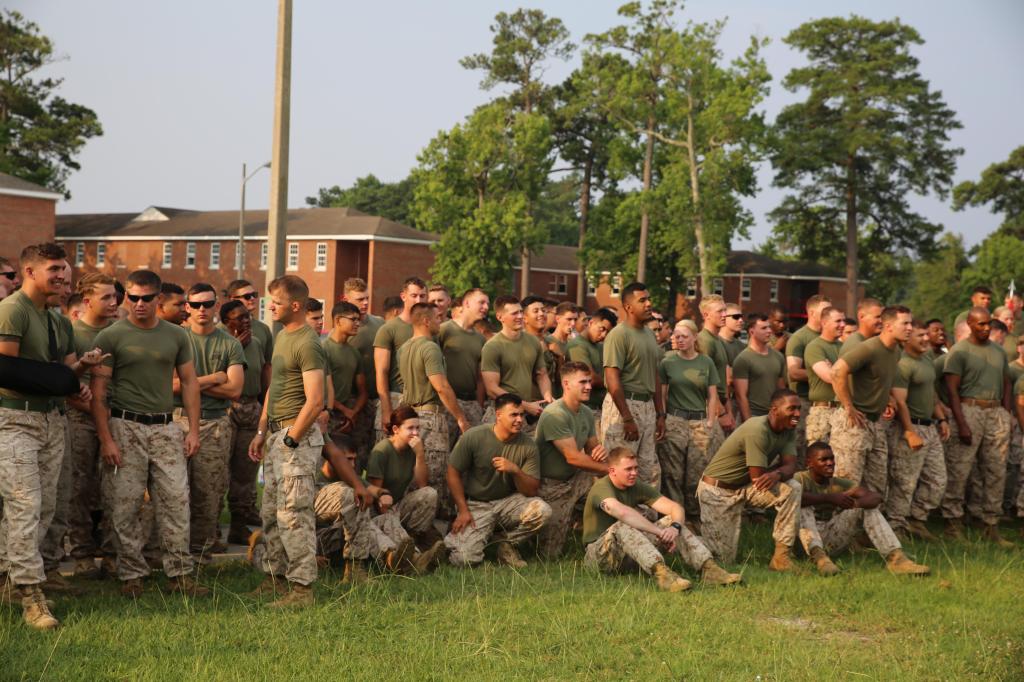
Group of Marines, GCEITF 2014 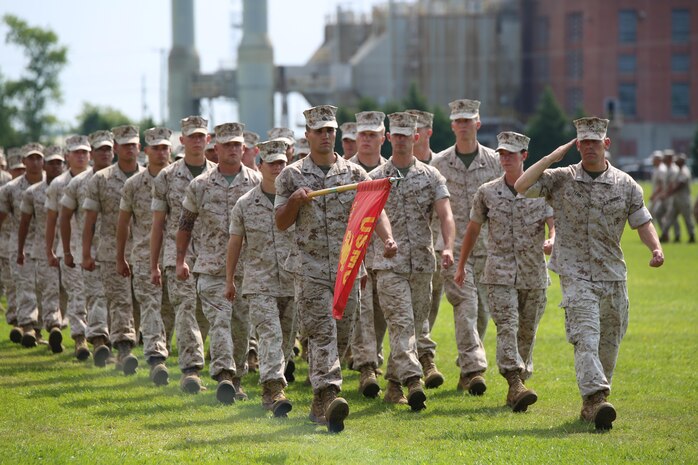
Marines in formation, GCEITF 2014
 Breaking Into the Brotherhood
I really look forward to reading all about this, Beth. Having lived it and gone through it (with you), I am thrilled that you have the energy and fortitude to capture this experience. I am still a bit traumatized, frankly. You are doing important work and I look forward to a signed copy when this gets published!
LikeLike
Thank you so much! It’s been a journey just to get to this point. I can’t wait to share all the GOOD stories that I’ve been hearing. 🙂 We really did make a difference, even if we didn’t see it at the time.
LikeLike
As a non military person I look forward to reading your story/book. It sounds si interesting and important. janne
LikeLike