Of the four countries we visited in 2014, the United Kingdom was the only one not permitting women in ground combat specialties. At the time, I didn’t think anything of it. I assumed we were there for a reason. We were visiting these countries to understand better their experience with women in ground combat specialties. If the UK had no women in ground combat specialties, there must have been a reason for our visit. As I write this post, I find myself wondering, why did we go to the UK?
Perhaps it was our shared history. After all, our military traditions, like much else in our government, began in the UK. Perhaps it was because of the close relationship we maintain to this day. Perhaps it was because the level of women’s integration in the UK and the US was approximately the same. They were going through a similar process as we were. Perhaps we wanted to commiserate, to share ideas and questions, to forge a way ahead together. I’m not sure, but I suspect it was a little of all the above.
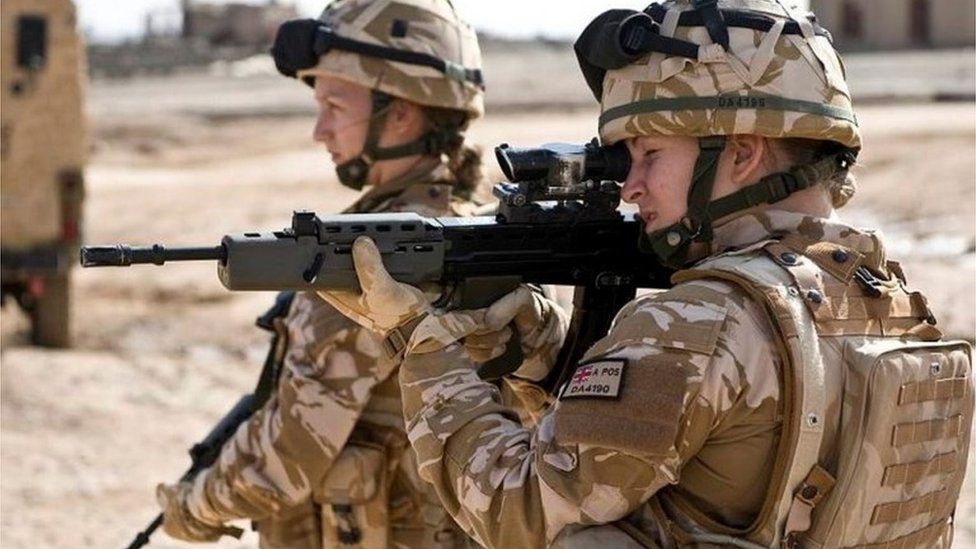
The UK first allowed women in its Nurse Corps with the First Boer War (1881). Of the other countries in this analysis, the UK was the first to deploy women away from the home front. In 1917, they deployed cooks and orderlies to run canteens in France. By mid-1918, approximately 35,00 women served in the Women’s Army Auxiliary Corps (WAAC), with 7,600 at the French front. The British government disbanded the women’s corps in 1921.
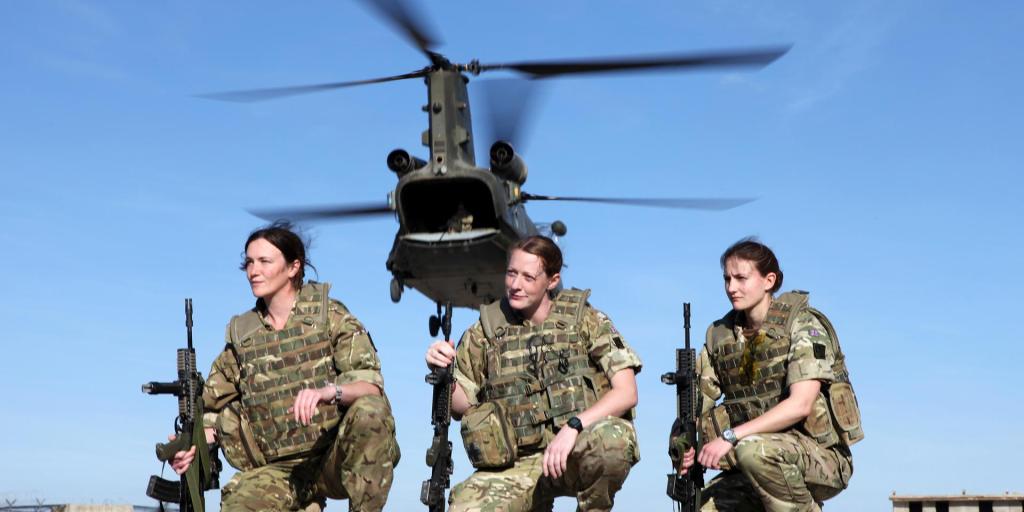
During WWII, the women’s corps emerged again. Women volunteered to serve their country in great numbers. Peak numbers reached 487,000 (of whom 80,000 served in the Navy, 185,000 in the Army, and 222,000 in the Auxiliary Territorial Services (ATS)). Despite heavy recruitment, volunteer numbers failed to meet (wo)manpower requirements – all designed to free men for combat in Europe.
Though Churchill opposed mandating women join the military, Minister of Labor Ernest Bevin advocated women’s conscription to Parliament. In December 1941, an updated National Service Act required the “conscription of all unmarried women between the ages of twenty and thirty”. Married women remained exempt, and the government could not compel the women to serve in any operational role nor fire a weapon. Women’s roles remained strongly gendered. The Ministry of Defense officially banned women’s employment in home front defense, though it did not adhere to this policy.
The British actively worked to keep the fact that women were participating in combat, at any level, a secret from the general population. The women found themselves subject to a “stable gender order”, with fashionable uniforms, accommodations with “bedside mats and divans”, alongside a publicity campaign designed to decrease rumors of any “unwomanly conduct”. The government forced them to resume “normal” gender roles at the war’s conclusion and denied women’s participation in war memorialization. The UK did retain a small cadre of women following the war, establishing women as a permanent presence in the Royal Armed Forces.
Over the past forty years, the British military has mostly restricted women’s roles. In the 1970s, things began to change and each service maintained different regulations for women. Navy women could deploy on training ships, but not operational (combat) ships. Likewise, women could fly transport aircraft, but not combat aircraft. Until 1975, Army women received different pay than men at the same rank. They also received no small arms fire training.
Ground Combat
The British Army excluded women from combat under Section 85(4) of the 1975 Sex Discrimination Act.
A European Community Equal Treatment Directive stipulated a review of the women’s role in “ground close-combat environments” to be undertaken every eight years. Each review has recommended keeping ground combat closed to women. In the 1999 Sirdar v. Army Board and Secretary of State for Defence, the European Court of Justice ruled that being a man is a “genuine occupational requirement” for a Royal Marine.
A 2002 “Women in Armed Forces” report stated no evidence existed that women would perform less well in ground combat jobs compared to men. Yet ground combat jobs remained closed. The argument staunchly maintained, “gender may influence team cohesion and consequently, affect operational effectiveness”. Military leaders believed women’s very presence was the problem.
In 2014, we met with our British Army and Royal Marine counterparts. It’s difficult to describe the sense of immediate camaraderie between the US Marines and the British Army and Royal Marines with whom we met. I seem to remember that one of our officers knew someone on the British side. Perhaps that was the origin of the visit, and the feeling of welcome I had from the moment we arrived.
At first, I enjoyed welcome and shared sense of camaraderie. Who doesn’t like to feel part of the group? Especially an elite group such as this. As our visit went on, I started to feel uneasy about this close relationship. I thought we were there to learn. Sometimes, I felt we were. Sometimes, I felt we were confirming to each other what we already thought to be true.
There was one moment in particular I remember. We were headed into another meeting. This one would take place in a secure space. So I could not take my note taking material with me. I had been taking copious notes on our trips. I wanted to ensure we captured the wealth of information we were receiving. The idea of a secure space was that people could talk without recording what people say – electronic or otherwise. This is usually for security reasons. I’m not sure why we were in a secure space that day. Perhaps it was the size of the conference room. It was a rather large meeting, 12-15 or more officers. American and British. All men. I was the only woman.
For the first time in my life, I had become invisible. I don’t remember how the meeting began, or even the specific topic. Women, of course. But what aspect about women, I don’t remember. What I do remember is hearing things said out loud I never thought I would.
I just remember staring at the table. I couldn’t think where else to look or what else to do. It seemed as if we were in a parallel universe. Were they really talking like I wasn’t even there? They couldn’t possibly notice I was still there. I couldn’t believe they would speak so freely if they did.
This went on for a few minutes. I don’t remember all they said. I really wished I had my notebook, so I could simply record everything they were saying. It would have given me something to do, if nothing else.
One comment I do remember.
One of the male officers was reading an email from another male officer about what it meant to be in the infantry. Of the things listed off, he mentioned, “bathing naked together in a stream with our helmets on”.
My brain imploded. It was a good thing I was already staring at the table, because my eyes popped out of my head.
“Bathing naked together in a stream with our helmets on.” That’s what it meant to be in the infantry.
I don’t remember how the rest of the room reacted. I was too busy keeping control of myself. I seem to remember the reaction was muted. The person speaking was a fairly senior officer, so any reaction other than agreement (silent or spoken) would have been inappropriate.
I couldn’t get out of that room fast enough. I felt overwhelmed, betrayed, radically out of place.
That evening, we had dinner at a local pub. It’s common during an international visit for the hosts to arrange a meal for their guests. Having participated in nearly two dozen international visits – both as guest and as host – I looked forward to these meals. The hosts usually took the opportunity to show off local cuisine, which was great fun. It also enabled hosts and guests to get to know each other better – as individuals instead of simply military officers.
I’m an Anglophile as well, and was highly confident that a visit to a British pub with fellow military officers would put everything to right.
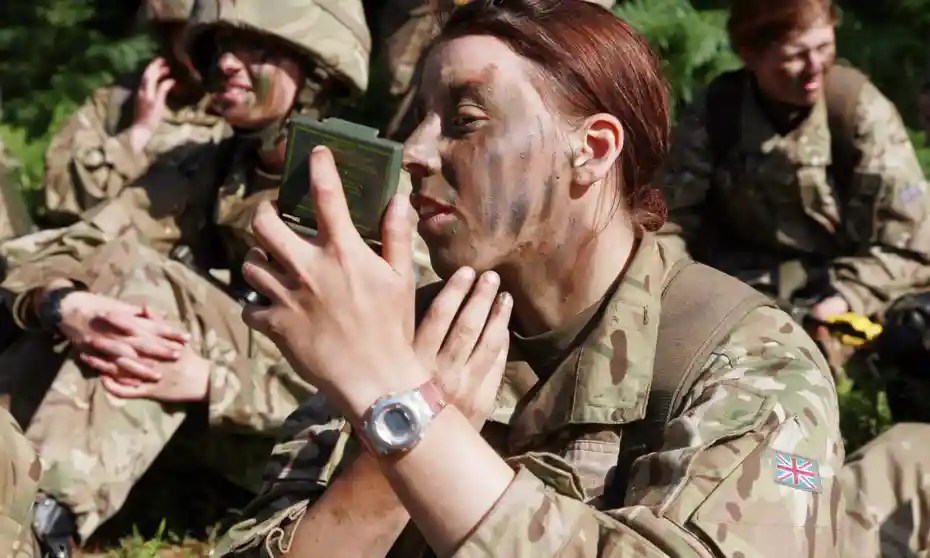
British pubs tend to be small, close spaces. So entering a pub with 20-25 individuals was a slow, tightly packed process. We crowded into the front part of the pub before moving to a room reserved for us in the back. I found myself squished on all sides by these massively tall, large men. While I was used to being surrounded by tall, large men (being a U.S. Marine for nearly 15 years at that point), I was not used to being packed amongst them like sardines. I felt positively tiny. It was hard to breathe. No one looked down, asked if I was ok, tried to create some breathing room for me. While the men talked and joked loudly with each other, they seemed to forget I was there. Once again, I felt like I disappeared.
As we sat down, I remained hopeful. This was my forte. Making conversation with international counterparts, enjoying a frosty beverage in a British pub, I felt I could finally make my way into the conversation.
But no one was interested in talking to me. The evening’s festivities revolved around sharing stories about deployments to Iraq and Afghanistan, stories of life in the infantry. It sounded like a lot of “beating their chests” about all the things they’d done in their careers. It felt like an exclusive club had gotten together for the evening. I had no place there. My repeated attempts to engage in conversation went nowhere. I finally stopped talking, and focused on my plate.
I seem to remember one of the Americans finally noticing me, and asking if I was ok. Of course I said I was fine. What was I supposed to say?
But I had never felt so excluded. I felt excluded because I wasn’t infantry and I wasn’t a man. I couldn’t possibly partake in their conversation or laughter. I also never felt so disrespected. I felt disrespected because I was one of the Americans, and therefore a guest on this visit. On every other international visit I had experienced, the hosts always paid particular attention to their guests. They always ensured guests were comfortable, included, welcome. If I had been the host, and had a guest who looked as uncomfortable and isolated as I did, I would have taken that person aside and spent time with them individually.
No one did that for me.
The evening concluded with everyone enjoying a whiskey. At the time, I thought all whiskey tasted like gasoline. So I demurred. I’m not sure the Americans even enjoyed whiskey, but they weren’t going to decline. It’s all part of the “doing things together to be part of the group”. So for me, it was just one more nail in the coffin of me feeling like I didn’t belong. I couldn’t wait to get back to my room and breathe freely for the first time all day.
My visit ruined, I remained quiet and took notes for the remainder of our UK visit. I listened a lot. No one asked me questions or asked me to contribute. This visit gave me my first glimpse into what the real issues surrounding women in the infantry.
The British Army successfully defended their position to keep infantry closed, alone amongst its Western allies, through 2015. Prime Minister David Cameron ordered the Defence Minister to “finish the job” on December 20, 2015 by opening all ground combat positions. He did so just two weeks after the U.S. Defense Secretary announced his decision to open all ground combat positions. Our British counterparts had told us they would wait until our research concluded before making their own recommendations. They were true to their word.
In many ways, this visit gave me a rare glimpse into what was really happening in all-male infantry spaces. It was the opening for the work I’m doing today. I wanted to understand why I felt so out of place, and why so many of my fellow officers (American and British) willingly allowed this to happen. I loved the Marine Corps. I had always felt like I belonged, in ways I never have outside the Marine Corps. Why was this so different?
To conclude on a lighter note, this trip encouraged me to explore the world of whiskey! I was determined that should another such opportunity arise, I would have a drink I could order and enjoy, simply to feel like I belonged. Many thanks go to my friends who took me on a tour of all things whiskey. I discovered that I enjoyed Scotch. (none of my friends was surprised)
 Breaking Into the Brotherhood
Super interesting. Thanks. Janne
Hent Outlook til Androidhttps://aka.ms/AAb9ysg ________________________________
LikeLike
This is definitely interesting to read from the Marine Corps side. A few years ago, my friend was the OIC at one of the units in the UK where it was a joint mission between US and UK. She told me that she had so much trouble at meetings because the UK Navy officers wouldn’t acknowledge anything she said or even her presence most times. She had to go through her Assistant OIC and/or her Master Chief in order to get them to agree to things. It was frustrating to say the least.
LikeLike
I feel for her. It’s a terrible position to be in.
LikeLike